2026/06/25
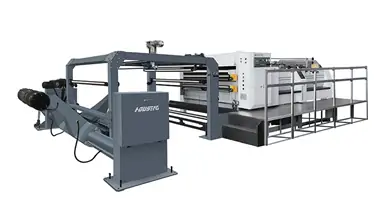
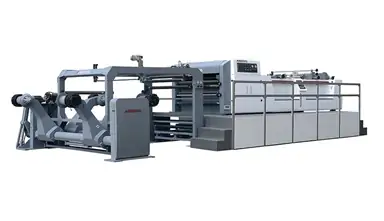
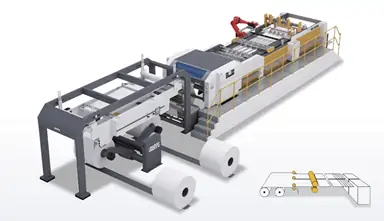
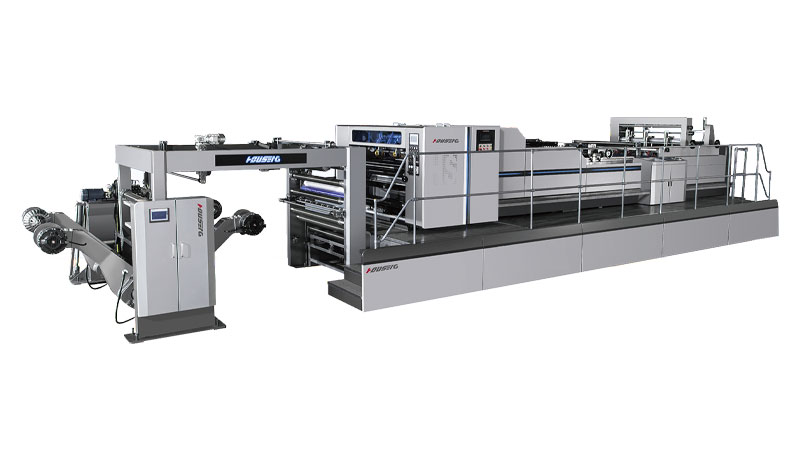
A servo‑driven sheeter is not limited to a single grade of paper. The same machine that cuts heavy cardboard for rigid box blanks on one shift can run lightweight art paper for brochures on the next. The key is understanding how each material behaves under the rotary knife and what adjustments are needed to maintain the ±0.3 mm cutting accuracy and clean, dust‑free edges that converters depend on.
1. Cardboard and Grey Board (200–600 gsm)
Cardboard – including grey board, chipboard, and coated duplex board – is the most demanding material for a sheeter in terms of knife wear. These boards are dense, often contain recycled fibre with abrasive particles, and generate significant dust when cut. The main challenge is maintaining a sharp knife edge: a dull blade on heavy board crushes the sheet rather than cutting it cleanly, producing a ragged edge that causes feeding problems in downstream printing or laminating.
Knife clearance on board should be set slightly wider than for uncoated paper to allow for the material's thickness and to reduce the cutting force. Operators running board predominantly often find that knife grinding intervals shorten to every 300,000 to 400,000 linear metres, compared with 500,000–600,000 for lighter grades.
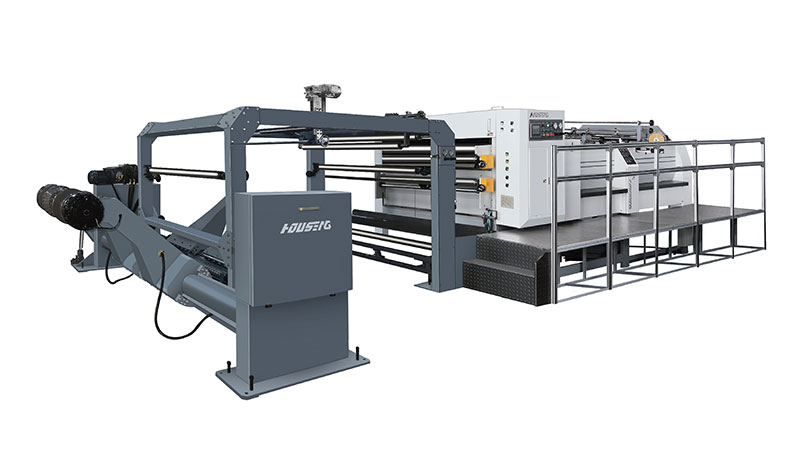
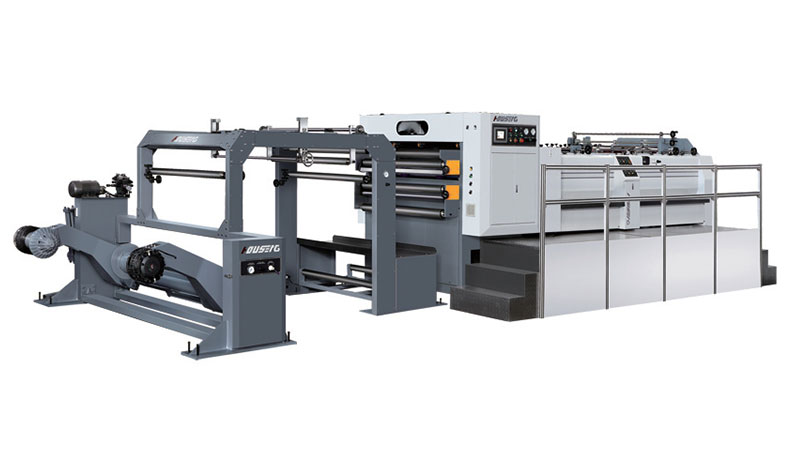
The infeed tension must also be adjusted: too much tension stretches the board slightly, producing sheets that measure correctly under tension but spring back to an undersize length after relaxation. A low‑tension feed with a positive nip roller grip is the standard approach. For converters running cardboard alongside lighter stocks, equipment designed to handle a broad grammage range is essential. A servo‑driven sheeter with quick knife clearance adjustment can move between heavy and light papers with minimal downtime.
2. Kraft Paper (60–200 gsm)
Kraft paper – both natural and bleached – is fibrous, elastic, and comparatively soft. It cuts easily, but the long fibres can create a dust problem, particularly when the knife edge begins to dull. The paper also tends to curl if the moisture content is uneven, which can cause feeding problems at the overlap station and layboy.
The knife clearance for Kraft can be set narrower than for board, but the blade must be kept very sharp to avoid pulling fibres out of the sheet rather than shearing them. Dust extraction around the knife section becomes important: Kraft dust is flammable and can accumulate inside the machine housing if not regularly cleaned.
Kraft's high tensile strength means the infeed tension can be set higher without risk of tearing, which helps maintain sheet‑length accuracy. Converters producing kraft sheets for packaging or envelope stock typically run at the upper end of the machine's speed range once the material is properly tensioned.
3. Coated and Art Paper (80–300 gsm)
Coated papers – including gloss, matte, and silk‑finish art papers – present a different challenge. The clay or mineral coating is abrasive to the knife edge, similar to cardboard, but the base paper is lighter and more prone to marking. Any surface contamination on the feed rollers can transfer to the coated surface and show up as visible marks on the printed sheet.
Knife sharpness is critical for coated grades because a dull blade not only produces a dusty edge but can cause the coating to crack along the cut line, creating a white, uncoated edge that is unacceptable for premium print jobs. The sheet‑delivery stack must also be handled carefully to avoid scuffing the coated surface; air‑assist stacking tables are commonly used.
For converters producing high‑quality printed sheets, maintaining consistent sheet length is as important as the edge quality because downstream offset presses require precise registration. Calibration checks should be performed more frequently when running coated papers for premium work.
4. Culture and Uncoated Wood‑Free Paper (50–120 gsm)
Culture paper – the standard uncoated paper used for notebooks, photocopy paper, and office stationery – is the most forgiving material for a sheeter. It is less abrasive than coated or recycled grades, cuts cleanly, and produces minimal dust. Knife life is longer, and the tension settings are straightforward.
The main consideration with uncoated papers is controlling static electricity, which can build up on the dry sheets and cause them to stick together or mis‑stack on the layboy. Anti‑static bars installed at the delivery section solve most of these problems. Humidity control in the sheeting room also helps: a relative humidity of 45–55% keeps the paper stable and reduces static.
5. Thin Paper (30–60 gsm)
Thin paper – including tissue, bible paper, and lightweight printing grades – requires the most delicate handling. These papers tear easily, stretch under minimal tension, and can be blown off course by the air currents generated by the rotating knife drum. The infeed tension must be reduced to the lowest level that still maintains web control, and the overlap station must be precisely adjusted to prevent the lightweight sheets from crumpling.
Knife clearance must be set very fine to achieve a clean shear without pulling the sheet. Some machines use a vacuum‑assisted delivery system to guide thin sheets onto the stack without wrinkles. Thin paper is also sensitive to environmental conditions; a sheet cutter running tissue or similar grades should be located in a temperature‑ and humidity‑controlled area.
Matching the Machine to the Material Mix
A converter that runs all five of these paper types on the same machine needs a sheeter that can switch between settings quickly. Knife clearance, infeed tension, and stacker configuration must all be adjustable without extensive mechanical work. Many modern machines store material‑specific recipes in the control system, allowing an operator to select the paper type and have the machine automatically apply the pre‑programmed parameters.
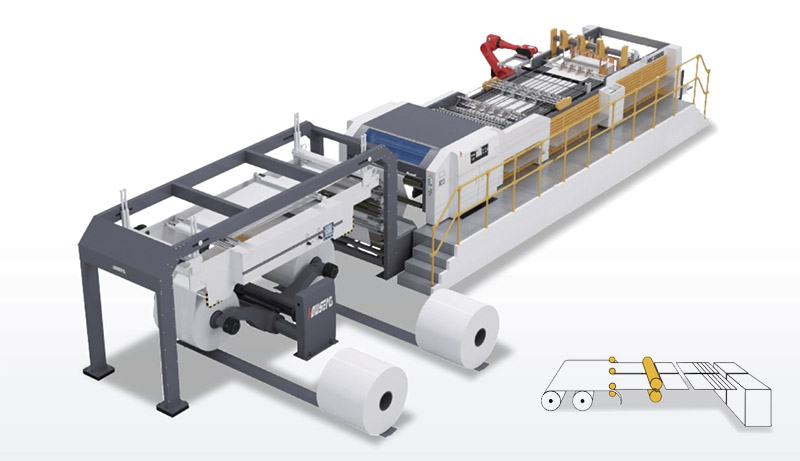
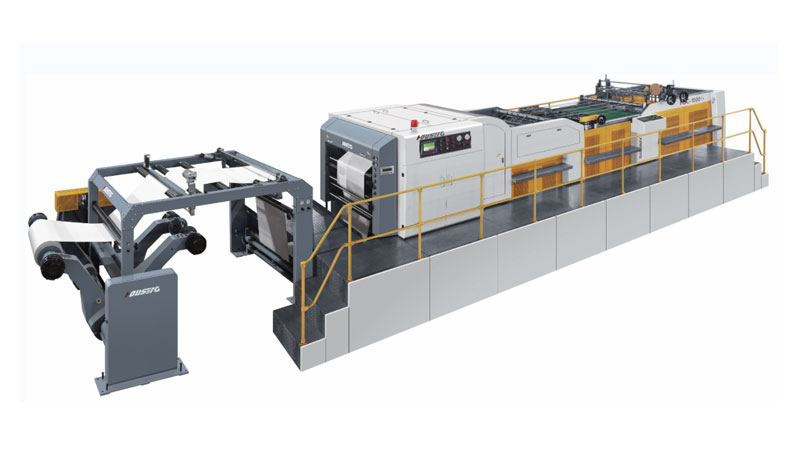
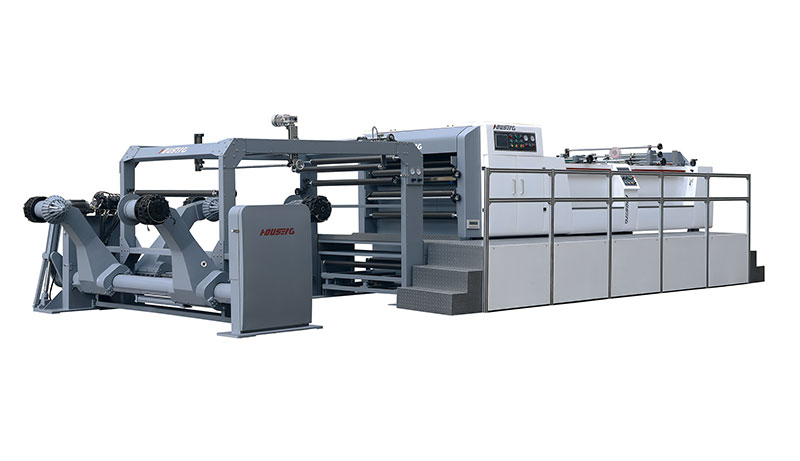
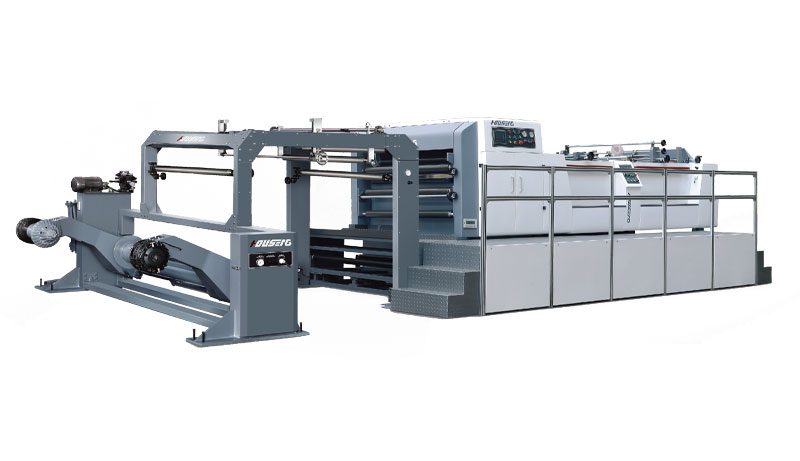
For operations looking to handle a wide range of materials – from board to thin paper – on a single platform, HAOSHENG's precision sheet cutting equipment is designed for quick material changeover and consistent accuracy across the full grammage spectrum.
A sheet cutter is only as versatile as the adjustments it allows. When knife clearance, infeed tension, and stacker settings are correctly matched to the material, the same machine can deliver clean, accurate sheets from cardboard, kraft, coated art paper, uncoated culture paper, and thin tissue. The key is knowing how each grade responds to the cutting process and dialling in the right parameters for the job.