2026/07/08
In industrial print house operations and commercial packaging plants, processing giant paper webs into flawless, press-ready sheets is a daily test of mechanical tolerance. While many production managers measure success solely by how many tons of material clear the floor per shift, a silent profit drain often lurks within the collection stack: edge quality degradation.
When dealing with high-volume runs, a fraction of a millimetre of inaccuracy or a micro-layer of paper dust can compromise subsequent processing steps. High-speed offset presses, premium folding carton gluers, and automated packaging lines require pristine sheet edges to maintain continuous feed rates. Understanding the variables that govern sheet geometry and fibre separation is the first step toward safeguarding operational margins.
The Anatomy of Slitting Faults: Why Paper Fuzz Forms
To correct slitting inefficiencies, production engineers must analyse the physical interaction between the cutting mechanism and the paper web. Paper is not a uniform block of plastic; it is a complex, anisotropic matrix of interwoven cellulose fibres, fillers, and surface coatings.
When a standard cutting blade penetrates this substrate, it exerts localised compressive stress before initiating actual shear failure. If the blade geometry is sub-optimal or the cutting velocity is poorly synchronised with the web speed, the fibres are crushed and torn rather than sliced cleanly. This mechanical tearing releases airborne micro-particles—commonly known in the industry as paper fuzz or slitting dust.
The consequences of excessive paper dust extend far beyond a messy factory floor:
-
Premature Press Wear: Fine cellulose particles migrate into press blankets and printing plates, forcing frequent non-scheduled wash-ups and stopping production lines.
-
Inking Contamination: Dust mixes with high-tack inks, causing hickeys and print voids that can reject entire batches of high-end cosmetics or pharmaceutical packaging.
-
Misinfeed and Jams: Rough, jagged edges alter the friction coefficient between sheets, resulting in multi-sheet feeds or critical structural jams in high-speed folder-gluers.
Technical Evaluation: Single-Knife vs. Synchronous Twin-Knife Cutting
Achieving a true shear cut across varying paper callipers requires selecting the appropriate mechanical configuration. Historically, the industry relied on single-spiral or stationary-anvil cutting designs. While functional for lower-speed operations, these configurations struggle when handling advanced or multi-ply substrates at scale.
For facilities processing heavy-duty board or high-end coated paper, upgrading to a specialised dual-rotation system is often necessary. To evaluate whether your current setup meets industrial demands, consider the structural and operational differences detailed below:
| Operational Metric | Synchronous Dual-Knife Configuration | Conventional Single-Knife System |
| Cutting Mechanics | Synchronised top and bottom rotating cylinders match web speed precisely. | One moving knife strikes against a fixed lower anvil blade. |
| Substrate Adaptability | Handles up to 1000 gsm without edge tearing or coating fracture. | Limited to lighter weights; heavy board causes severe edge crushing. |
| Dust Generation Profile | Near-zero fuzz; preserves integrity of surface coatings. | High particle shedding due to dragging and crushing action. |
| Blade Maintenance Interval | Extended service life due to distributed rotational forces. | Frequent honing required to minimise worsening edge fuzz. |
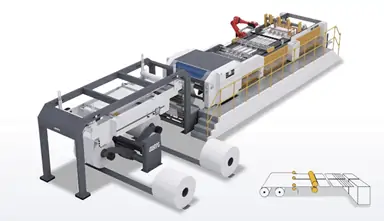
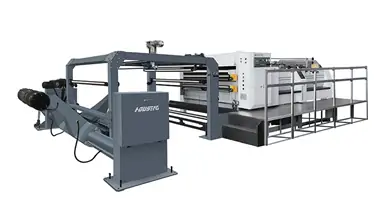
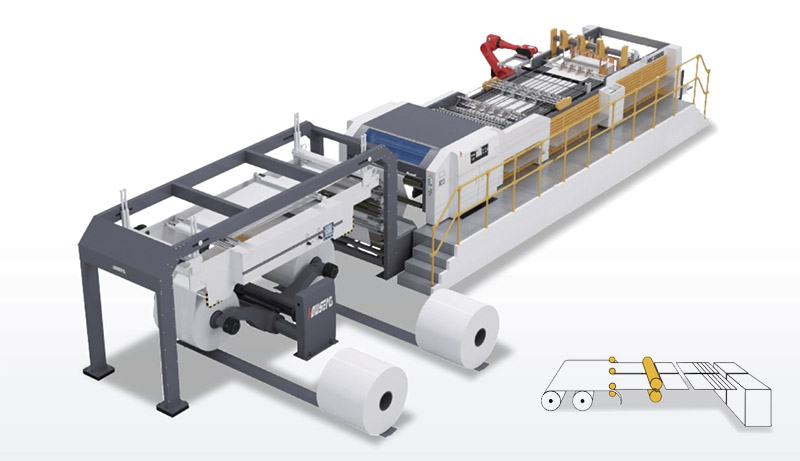
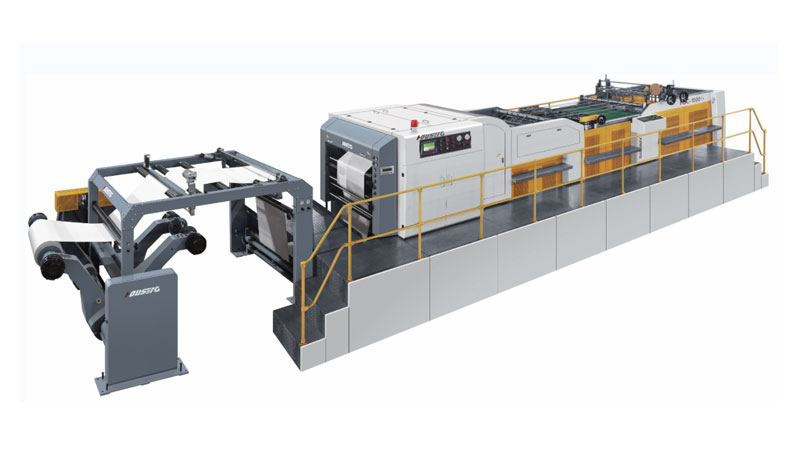
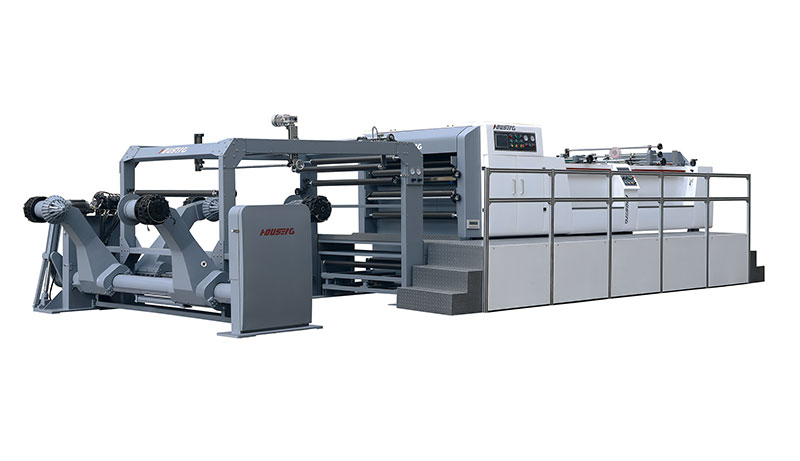
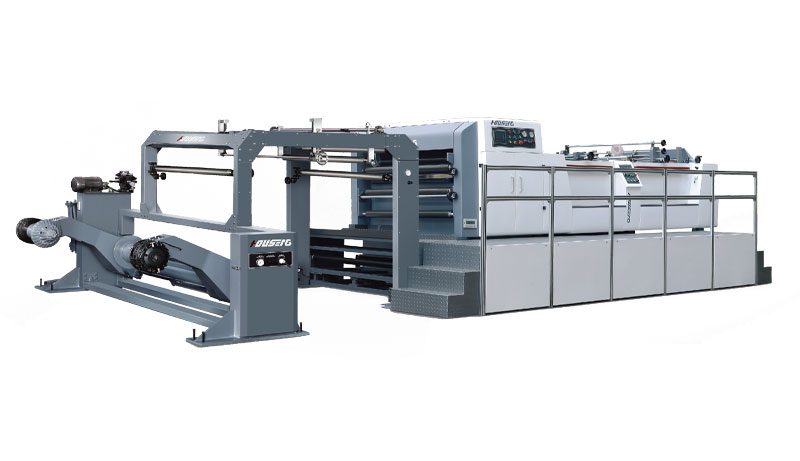
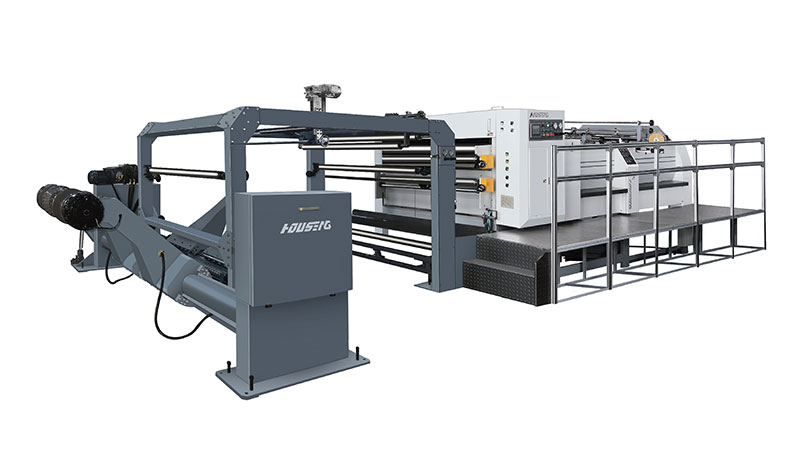
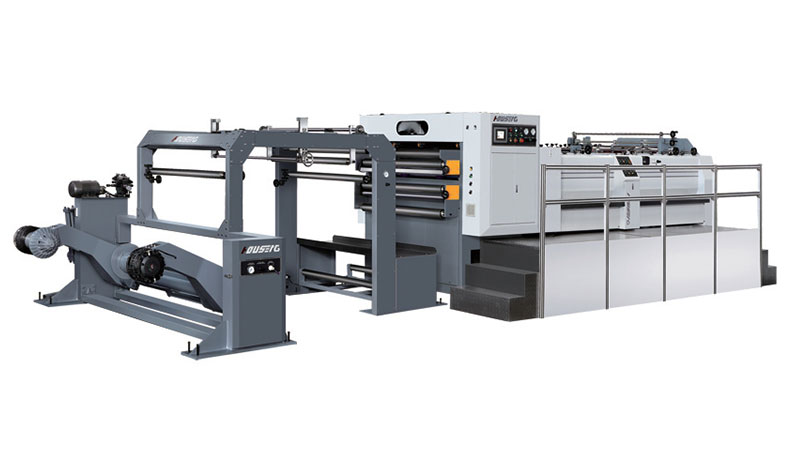
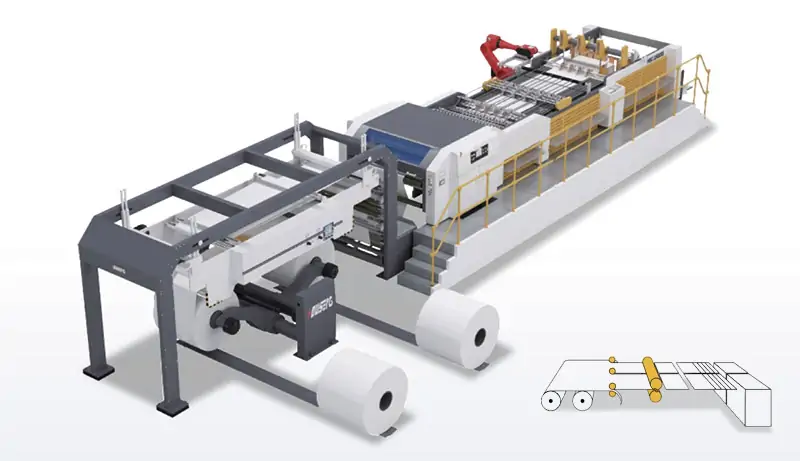
By transitioning to configurations that utilise two rotating drums, the relative velocity between the knife edge and the moving paper drops to zero at the exact moment of separation. This eliminates the dragging force responsible for fibre tearing. Plant managers looking to eliminate secondary trimming stages often integrate an Intelligent Double Rotary Sheeter into their finishing workflow, which effectively bypasses the mechanical shortcomings of standard single-knife machinery.
Advanced Optimisation Framework: Tension Control and Speed Synchronisation
Upgrading mechanical components is only half the battle. Precision sheeting requires maintaining a tight equilibrium between web tension and knife speed synchronisation. Even a minor discrepancy in torque or brake pressure can cause the paper to sag or over-stretch during the slitting phase, distorting the final sheet profile.
Automated Web Tension Profiles
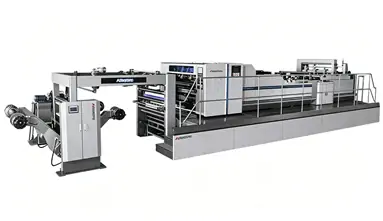
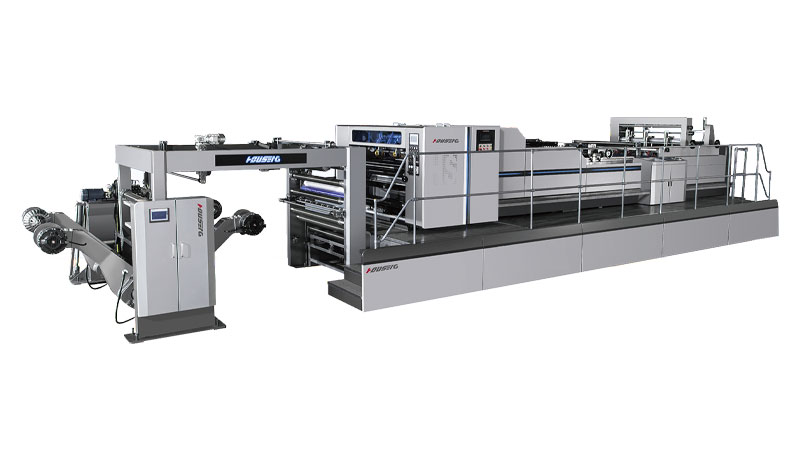
As a paper roll unwinds, its total diameter shrinks rapidly. Without constant mechanical adjustments, the brake torque remaining constant would cause web tension to spike. This elongation stress means that once a sheet is cut, it snaps back slightly, ruining the squareness tolerance. Modern systems utilise electronic load cells coupled with closed-loop servo controls to measure tension continuously. Implementing an Intelligent High-Precision Double Rotary Sheet Cutting Machine allows for real-time calibration, ensuring that whether a roll is at its full 1500mm outer diameter or near the core, the material undergoes uniform tension.
Direct-Drive Electronic Synchronisation
Mechanical gearboxes introduce backlash over time—microscopic play between gear teeth that compromises precision. Replacing these older mechanical link trains with independent servo drives directly connected to the knife drums allows software algorithms to govern the cutting curve. The software speeds up or slows down the knife cylinders precisely during the non-cutting portion of the rotation to ensure that at the precise moment of impact, the blade tip moves flawlessly in tandem with the web.
Strategic Investment for Long-Term Conversion Operations
For commercial converters and packaging providers, selecting finishing equipment dictates your downstream operational capabilities. Sub-par sheet dimensions or high dust accumulation will inevitably bottleneck advanced multi-colour printing presses and high-speed box gluer lines.
When configuring a new sheeting section, look for manufacturing features that prioritise structural rigidity, such as integrated cast iron base frames that absorb micro-vibrations at full operating speeds. If your plant processes a broad mix of stock—ranging from thin digital printing papers to thick, rigid board—reviewing customised options becomes crucial. To find a setup tailored to your specific plant blueprint, you can see our advantages in mechanical execution and automation.
Ultimately, mitigating waste and removing secondary clean-up processes from your workflow improves your overall bottom line. By investing in precise shear mechanics, modern automated tension monitoring, and robust direct-drive controls, conversion facilities turn their finishing department from a potential bottleneck into a distinct competitive edge. For a deeper breakdown of system footprints and custom capacity options, you can view the full product line and our advantages to map out your next facility upgrade.